
Understanding the Standard American Diet

“The American diet is great for your health!” – said no one ever. Yikes.
The standard American diet doesn’t have a reputation for being healthy, but most Americans grew up eating this way (myself included, so no judgment).
If you are American or have ever visited America, you will see that America’s food culture is incredibly diverse and varies by region, from NYC street food to Southern home cooking. Yet many foods still share a common pattern: they are often high in sodium, added sugars, and saturated fats, and are served in large portions.
While many foods in the American diet are often considered processed (and not the best for health if eaten frequently), people tend to eat this way for personal reasons. It's not just about enjoying the taste or neglecting their health; there are usually other factors involved.
Busy schedules, picky kids, limited cooking skills, convenience, cost, culture, comfort, and familiarity can all influence food choices. Fast-food apps, meal deals, and rewards programs can make these options even more appealing, especially when living on a budget.
This pattern also shows up when you walk into almost any grocery store in the US. You’ll likely find that many shelves are filled with processed convenience foods like chips, cookies, sauces, canned fruit and vegetables, cheese, deli meats, and boxed cereals. Stores also often offer discounts on packaged convenience foods, making them an affordable option for some people.
While processed foods themselves aren't necessarily unhealthy, the main concern is that many ultra-processed options tend to be higher in sodium, added sugars, saturated fats, and calories, while often being lower in fiber and other important nutrients, contributing to an unbalanced diet.
The good news is you aren’t doomed to eat this way forever, and improving your diet does not mean giving up every processed or ultra-processed food you enjoy. Often, small adjustments can make a meaningful difference.
Instead of completely removing or never eating less nutritious foods, some people find it easier to focus on adding nutritious foods to their meals and snacks. Surprisingly, this approach can make eating healthy feel more manageable and sustainable long-term.
In real life, this could look like:
Adding a banana or berries to breakfast cereal
Choosing whole-grain bread for sandwiches
Including fruits or vegetables with meals
Choosing snacks that contain fiber and protein
For example, in a packed lunch, you might have a turkey and cheese sandwich on 100% whole-grain bread, carrot sticks, apple slices, a mini packet of chips, and flavored water.
Not only does food choice play a role in health and weight, but portion sizes and cooking methods also influence overall nutrition. Portion sizes in the US tend to be larger than in other regions, which can contribute to weight gain and other health issues. To keep portions in check, you can use scales, measuring cups and spoons, portion-control plates and bowls, or the hand method.
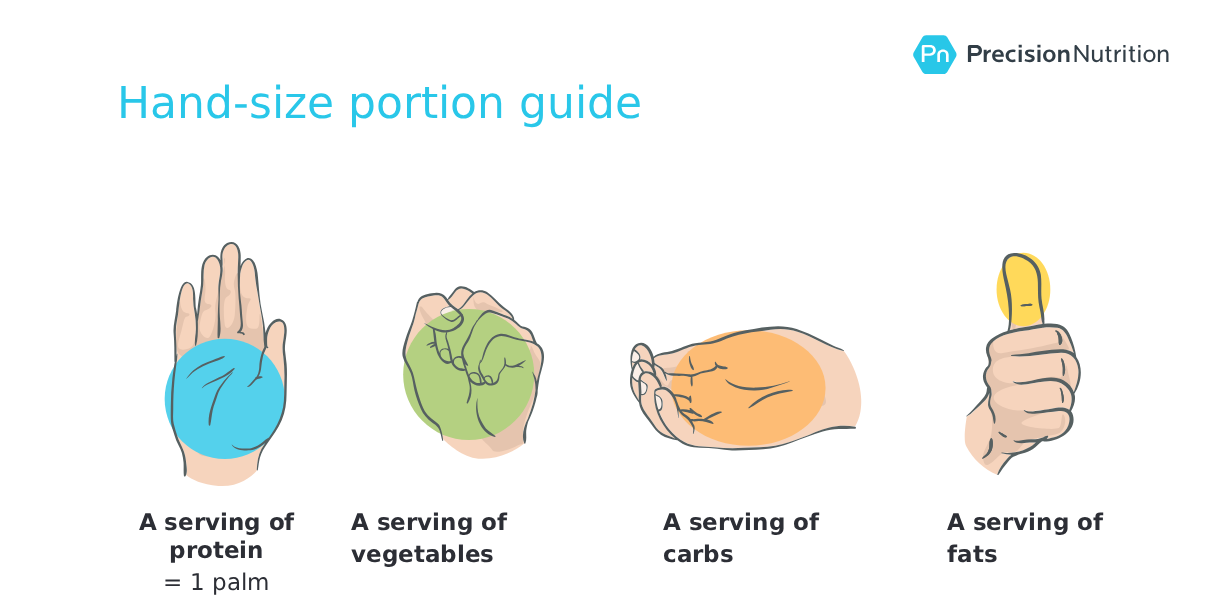
Image belongs to Precision Nutrition
When cooking at home, being mindful of ingredients like sugar, salt, and added fats can improve the nutritional quality of meals. Some ingredients can be swapped for healthier alternatives, or, in some cases, reduced or skipped altogether. The same goes for cooking methods. Baking, roasting, grilling, or air-frying may reduce the amount of added fat compared to deep frying.
The standard American diet may not be known for its health benefits, but that doesn’t mean you need to completely give up the foods you love or feel ashamed for eating them. Nutrition does not have to be all-or-nothing, and small, realistic changes can make a difference over time.
In the next post, we’ll explore practical food swaps and simple ways to make familiar meals more balanced without sacrificing flavor or enjoyment.